About
A studio built around cloth, not screens.
PatternForge works with apparel labels, interiors brands, and mills who need patterns that hold together in production. We're happiest with ink on paper in the morning and a loom or a knitting machine in the afternoon.
What we care about
Repeats that don't announce themselves. A motif should carry across a metre of fabric without a seam or a tell-tale line pulling the eye. That takes redrawing, not filters.
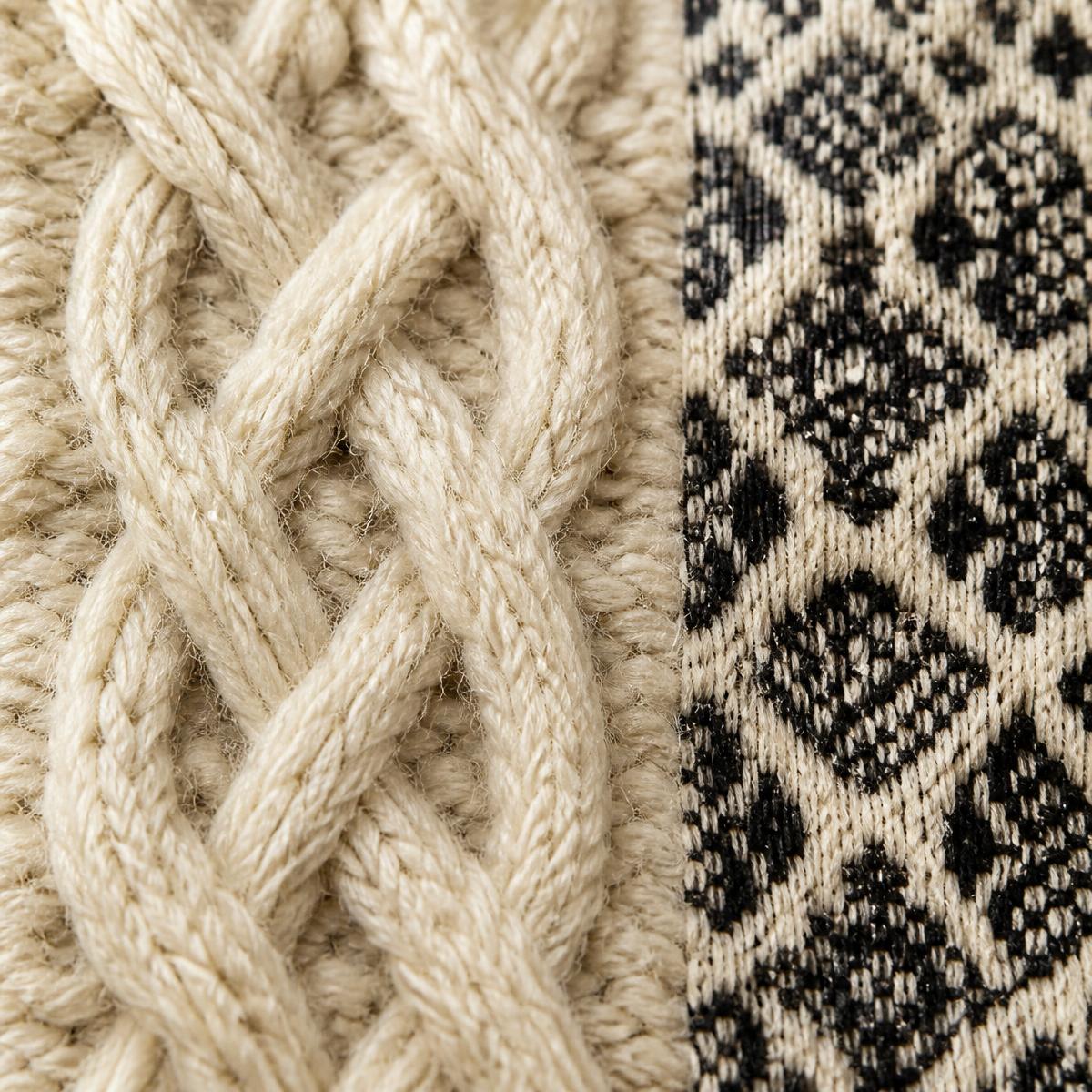
Structure as pattern. A twill step, a float, a tuck stitch — often the most interesting surface is built into the cloth rather than printed on top of it.
Honest material choices. We'll tell you when a recycled blend changes the drape, and when a natural dye route won't survive the wash tests your customers expect.
How a project runs
- 01
Brief & references
End use, width, yardage, budget, and the fabrics you already love. We look at what the cloth has to do before we draw anything.
- 02
Sketch & structure
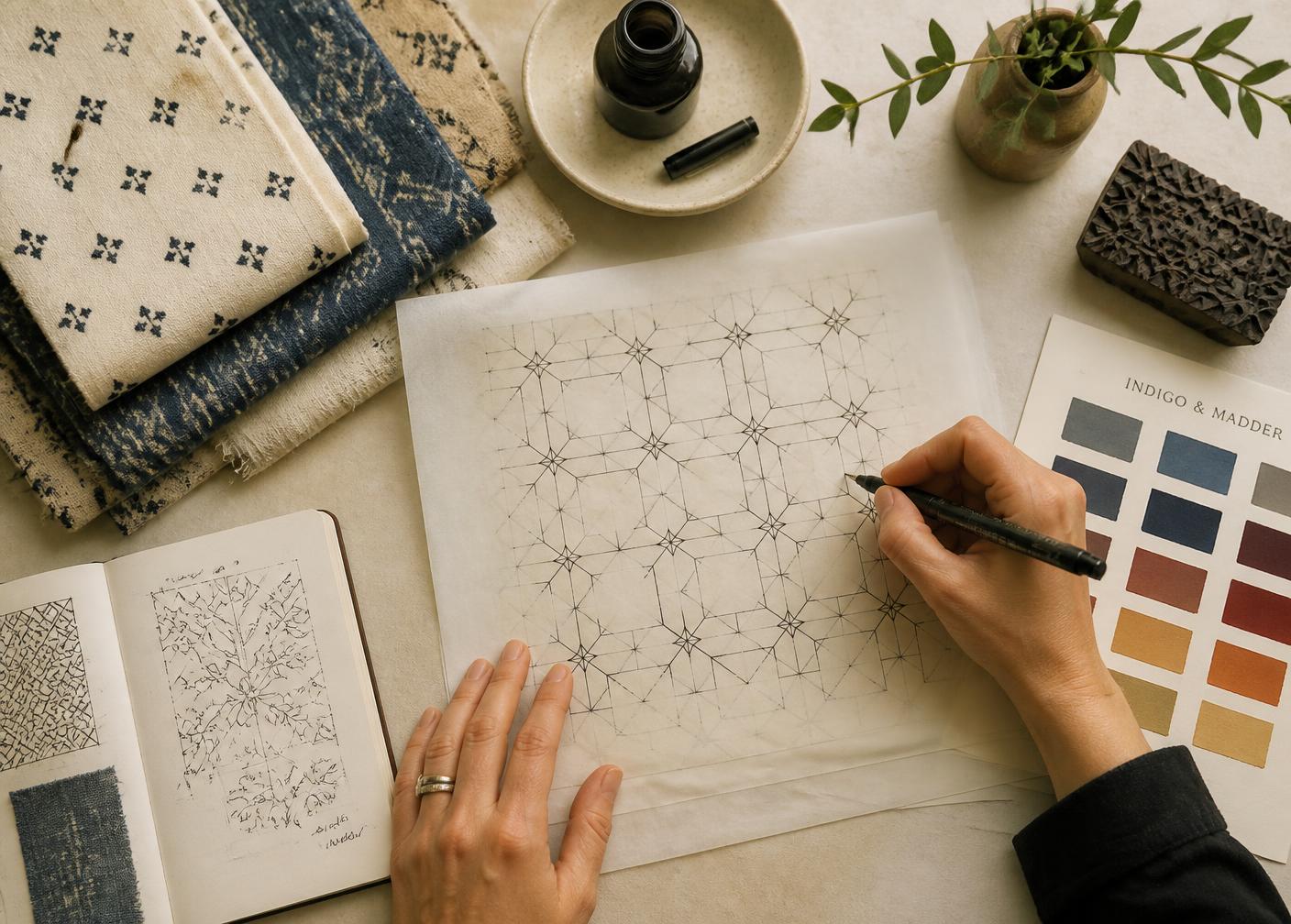
Hand drawing, block or brush marks, and — for wovens and knits — a first draft of the structure and yarn count.
- 03
Repeat & colourways
Clean tiling, separated layers, and two to four colourways referenced to a physical standard rather than a screen.
- 04
Sampling & sign-off
Strike-offs and hand samples, washed and reviewed. Adjustments to scale, registration, or hand, then final files.